

The Jar My Coworker Keeps in Her Third Desk Drawer
OLLY's Laser Focus is a 36-chew jar of ginseng, Alpha GPC and B vitamins that sells for $13.99 at the register. I read its label, its reviews and its return terms before my next afternoon slump.


First, the people in this story: Rose Calloway is a pen name, and the coworkers and the office are composites of many afternoons at many desks.
What this page says about the jar comes from the seller's listing, its label, its return terms and published studies, all read in October 2026.
There is a sound a spreadsheet makes at 3 PM.
It's not the fan in the laptop and it's not the phone buzzing. It's the sound of your own attention letting go of the wheel.
You re-read the same row for the third time.
You type a sentence, delete half of it, then sit looking at the cursor like it owes you money.
I'm 52, I run payroll and compliance reporting for a logistics company, and I have spent eleven years watching the clock hit three and watching my brain clock out an hour early, every day, like it has a union contract.
Coffee stopped solving it somewhere around my mid-forties.
By two cups I was awake, sure. But awake and pointed at the work are two different things.
I want to be clear about what the fog is and what it is not, because the internet has turned it into a symptom of everything.
The fog I mean is the ordinary kind.
The 2:30 meeting where you nod along and retain nothing. The email you start three times.

It is not the kind of thing you see a doctor about, unless it changes.
If it arrives suddenly, or worsens week over week, or comes with other changes — that is a different conversation, and one worth having with a clinician, not with a web page.
For eleven years, my answer to the ordinary fog was the same as everyone else's at the office.
A second coffee at 1. A third at 2:30 that I didn't finish.
A walk to the printer that had nothing to pick up.
The coffee worked, in the way a credit card works.
It borrowed alertness from the evening and charged me interest at 9 PM.
Lying awake at nine, rebooting my whole night for the sake of two good hours of spreadsheets.
The jar in the third desk drawer
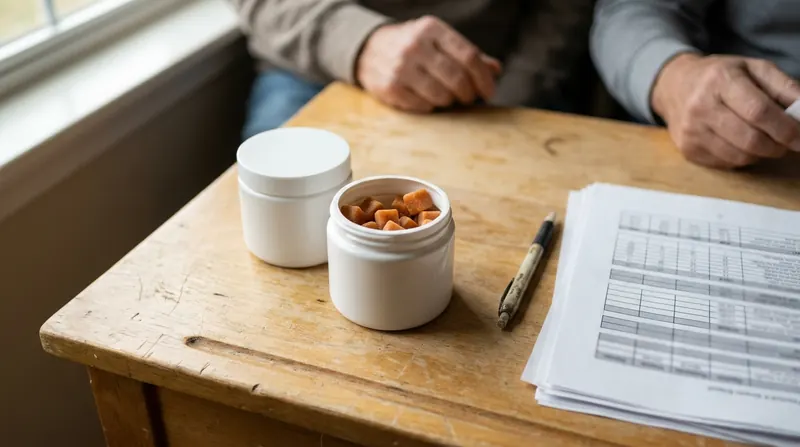
My coworker Dana is 58 and reads the label on everything, the woman reads ketchup labels.
So when I asked what she was chewing at 2:45 on a Tuesday, she didn't just show me the jar. She turned it around slowly, like a courtroom exhibit.

It was a squat white jar, orange lid, the label printed in that friendly rounded font.
OLLY Laser Focus. Berry Tangy Tangerine flavor. 36 soft chews.
"Two a day," she said. "Chewed properly, no water needed."
"And the part that does the lifting is the ginseng — the listing says it starts working within an hour."
I wrote the price down, because that's the kind of person I am.
$13.99 for the jar. Eighteen days of two-chew afternoons.
Dana is not a wellness influencer. She is a 58-year-old woman who processes vendor invoices and has strong opinions about the office thermostat.
Which is exactly why I listened.
She had arrived at the jar the same way I did: through the fog, through the failed coffee arithmetic.
And through a sister-in-law who mentioned it at a birthday party.
"It's not hocus-pocus," she told me, chewing.
"It's thirteen bucks and it makes three o'clock feel like eleven o'clock."
"Most days. Not all days."
I have thought about that sentence more than about any claim on any label.
That is the honest register of this whole page: a real product, a fair price, an effect that shows up for most people and fails for some, and nothing mystical anywhere in the jar.
Per two soft chews: 100 mg of ginseng extract (Panax), 200 mg of Alpha GPC, 4 mg of vitamin B6 and 12 mcg of vitamin B12.
The seller makes no claims beyond structure and function, and the FDA has not evaluated the statements.
Three pieces, one hour
The label names three active lines. I went and read the papers behind each one.

The first piece is the ginseng.
Two small trials of a standardized Panax ginseng extract tested exactly this territory.
One used a single 200 mg dose; the other, eight days of 200-400 mg. Both reported better performance on mental arithmetic, and the single-dose study reported less self-rated mental fatigue during an hour of sustained mental work ([1]).
At the higher dose of the eight-day study, calmness and arithmetic scores both improved ([2]).
The doses in those trials sit in the same neighborhood as the 100 mg in two chews — but those were extracts standardized to specific ginsenosides, in young adults, in small groups.
"Same neighborhood" is not "same thing," and I'll come back to that.
The second piece is the Alpha GPC.
It's a choline compound — choline being the nutrient your body uses to make acetylcholine, the neurotransmitter that runs memory and attention.
In a long-running community cohort, higher dietary choline intake tracked with better verbal and visual memory performance ([3]).
Again: that's choline from food in a large observational study, not Alpha GPC from a jar. And it's an association, not a cause.
The third piece is the B vitamins.
B6 and B12 are required for healthy brain function — that part is textbook.
But a 2018 Cochrane review of 14 trials in nearly 28,000 cognitively healthy adults concluded B-vitamin supplements probably have little or no effect on global cognitive function ([4]).
For context, the two-chew serving carries 12 mcg of B12 against an FDA Daily Value of 2.4 mcg ([5]) — five times the daily value, as printed on the panel.
None of them tested OLLY Laser Focus itself.
What the jar offers is a fair price on a formula whose pieces have some human evidence — nothing more, and nothing less.
Eighteen afternoons, two chews
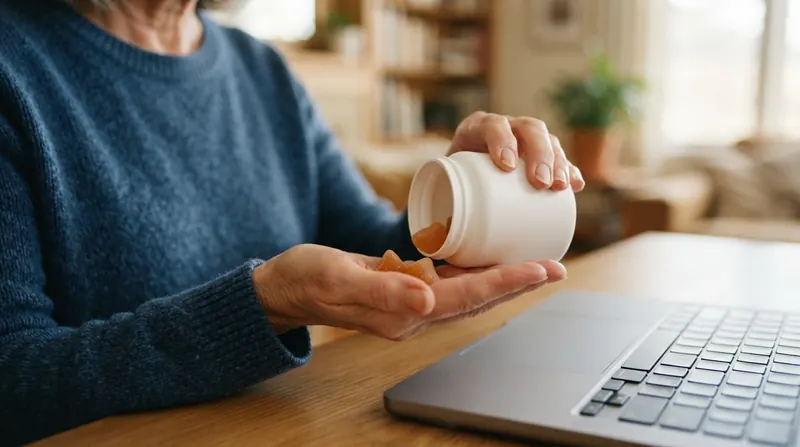
I bought the jar that same week and ran it the way I run everything: like an audit.
Week one, I took two chews at 1:30 PM, right before the fog usually rolls in.
The flavor is a tangy berry-tangerine, better than the vitamin aisle standard, though a handful of reviewers call the aftertaste bitter — more on them below.
By 2:30 on most days that first week, the difference I noticed wasn't electric.
It was quieter than that.
The spreadsheet rows stopped winning.
I re-read a row once and moved on, instead of three times and a sigh.
About the flavor, since half the reviews are about the flavor.
The front of the jar promises Berry Tangy Tangerine, and the first chew delivers exactly that: a bright, slightly sour tang, the kind of candy-flavor engineering that supplement companies have gotten genuinely good at.

The second chew is where opinions split, and I understand both camps.
There is a green, herbal note underneath — the ginseng, presumably, which has never pretended to be a dessert.
Chew fast and you barely meet it. Chew slowly, and it introduces itself.
My own notes from week two say: "like a good sour candy that went to a seminar."
Dana's notes, when I read her that line over the partition: "accurate."
The listing says no water needed, and it is right — though I kept a glass at hand anyway, out of eleven years of coffee reflex.
Week two, I forgot them on a Wednesday.
That afternoon is in my notes as "classic fog," which is its own kind of data point, though the honest scientist in me notes that a single forgotten day proves nothing but my own memory.
Week three, I started writing down the afternoons, because a compliance habit dies hard.
Monday: two chews at 1:15, quarterly filings.
Finished the batch by 4:40 without the usual 3 PM stall.

Tuesday: forgot them until 2:50. Took them late.
The fog arrived anyway, politely, like it had been waiting at the door.
Wednesday through Friday: chews at 1:30 sharp, and three afternoons in a row where the last two hours of the day felt like the first two.
Saturday: none. No fog either — weekends apparently don't file reports.

I am not going to tell you those notes are science.
They are one desk, one jar, one October, and a woman who wanted her afternoons back.
What I can tell you is what the notes are not.
They are not a claim that your afternoons will go the same way, and they are not a claim about anyone's memory.
They are the honest ledger of a jar that did, some days, exactly what its label modestly says it supports.
Somewhere in week two I noticed something I had not expected: the chews had become a boundary.
A two-minute stop at 1:30 where I stood up, walked to the window, chewed, and looked at the parking lot.
Eleven years of compliance work and I had never once built a wall between the first half of the day and the second.
The coffee was fuel poured on the move; the chews were a small ceremony with a start time.
I make no claim that the ceremony is in the jar.
Half the effect of any daily ritual is the fact that it is a ritual, and any honest page about afternoon focus has to say that out loud.
What 396 buyers actually said
The jar's listing shows 396 reviews with an average of 3.8 stars, and 94 percent of reviewers recommending it.
The full spread: 214 five-star, 45 four-star, 42 three-star, 25 two-star and 70 one-star.
I read through both ends of that stack, because the ends are where the truth lives.
"Great laser focus! Really works for my afternoon slumps especially at 3 PM on a Friday. Taste great and is very chewy. Love incorporating this into my routine."
"It gives a gentle boost in focus without making me jittery or anxious. I notice my mind feels clearer and it's easier to stay on task, especially in the afternoon."
"Laser Focus is my go-to for focus because of the B6, B12, and ginseng! It's a great value for the money since it does help greatly to stay focused on a heavy day!"
"Tastes orangey at first, but then gets followed up by an awful aftertaste. I thought these might help with how my mind works… but Laser Focus did nothing for me personally on top of the unpleasant aftertaste."
"This product tastes absolutely terrible. I was expecting a tangy flavor as advertised on the label, but these taste very bitter with a slight hint of fruity flavor."
That's the honest spread: for most buyers in that stack, the jar helps their afternoons.
For a meaningful minority, the flavor fails or the jar does nothing.
A 3.8 with 94 percent recommending is a real product with real limits, and I'd rather tell you both ends than sell you a fantasy.
$13.99 against the alternatives
I did the arithmetic on the back of a receipt, because that's where this kind of arithmetic belongs.
The jar costs $13.99 and holds 36 soft chews, which is eighteen days at the listed two-a-day serving.
That's roughly 78 cents per afternoon — about what the office vending machine charges for a bag of pretzels that does nothing for your attention span.
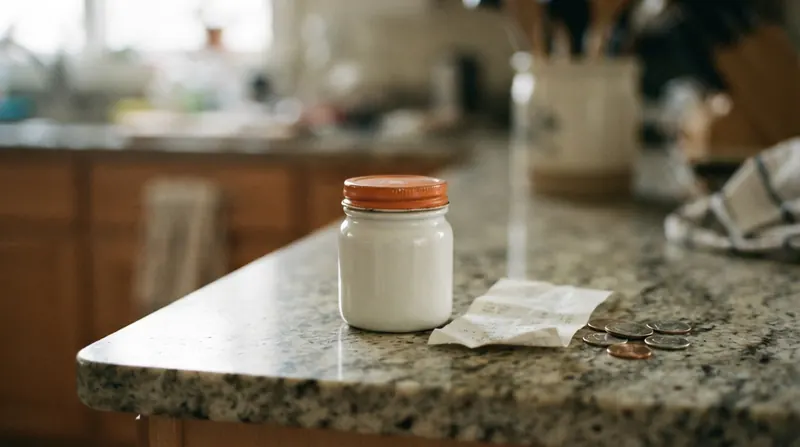
Compare that to the alternatives I'd already priced that year: the $60 "focus" capsule stacks from the internet, the third daily coffee that buys jitters and a 4 PM crash, or the $9 "smart drink" from the place downstairs that's mostly caffeine and hope.
And the return terms are the part that actually closed me: the seller accepts returns within 30 days.
You can buy the jar, run your own eighteen afternoons, and if the fog wins anyway, you're out a postage stamp, not the price of the jar.
One more thing about the return window, because I have run enough compliance to know how these clauses usually work.
There is no restocking fee printed on the listing. There is no "must be unopened" language.
It says thirty days, plain as a receipt.
Contrast that with the focus-stacks I tried in the spring.
One wanted the bottles back, another charged a fee, and a third had a phone tree that ended in a dial tone.
A thirty-day, plain-English return policy is not a medical claim, and it is not science.
But it is a company putting its margin where its label is.
That, plus the 78 cents, plus a formula whose three pieces each have some honest paper behind them, is the whole case.
The rest is your afternoons, your jar, your thirty days.
The three questions my sister asked me
My sister is a school nurse and the family's designated skeptic, so I showed her the jar and the page draft.
She asked three questions, and they are the three you are probably asking.
"Isn't this just candy with a marketing degree?"
No — the doses are printed and the chews are the delivery, not the point.
But she is half right: the candy part is why people remember to take them, and forgetting is where most supplement routines die.

"What if I already take a B-complex?"
Then look at your panel before adding this one: two chews carry 235 percent of the B6 daily value and 500 percent of B12.
Doubling nutrients that you already top up is how tidy people accidentally overdo it.
"Can I take it alongside my blood-pressure medicine?"
That is a pharmacist question, not a web-page question — take the jar to the counter and ask.
The listing prints no interaction warnings, but ginseng is a real botanical and your pharmacist should see real labels.
I told her the same thing I will tell you: thirty days, one jar, one honest answer at the end of it.
No subscription to cancel, no autoship to forget about, no fine print standing in the way of a plain decision.
The seller takes the jar back inside that window, and my sister approves of that clause more than of anything else on this page.
Who this jar is for — and who it isn't
A note on who I am not: I am not a clinician, a nutritionist or a scientist.
I am a payroll-and-compliance person who reads labels for fun and cites her sources, and every study quoted on this page is listed at the bottom.
If you want the deep version — what each line of the panel is, who funded each study, and which of our own advertising headlines were exaggerated — the ingredient guide in the footer is the honest page of this site.
- The afternoon fog is an ordinary pattern — but if focus problems are new, sudden or worsening, that is a conversation for your clinician, not for this page.
- The ingredients have modest human evidence behind them, mostly in small trials and observational studies; none of it tested this jar.
- The jar makes structure-and-function claims only, the kind the FDA has not evaluated, and no supplement replaces medical care.
- 78 cents an afternoon, 30-day returns, no subscription required to try it.

If your problem is the 3 PM fog of a normal, overstimulated workday — the kind I've watched for eleven years from a compliance desk — a $13.99 jar of ginseng, Alpha GPC and B vitamins is a reasonable thing to try before the expensive stacks.
If your problem is anything else, see the first bullet above.
36 soft chews · $13.99 · 30-day returns · Ships in 2-3 business days
What the label prints, line by line
For the readers who read panels the way Dana does — and you should — the active lines are these.
Panax ginseng extract (root), 100 mg per two soft chews, no daily value established.
Alpha GPC, 200 mg, no daily value established.
Vitamin B6, 4 mg, 235 percent of the daily value.
Vitamin B12, 12 mcg, 500 percent of the daily value.
Berry Tangy Tangerine flavor with other natural flavors, no caffeine declared, 36 chews to a jar.
The label, line by line, with the amount in each serving, what each ingredient is, and what the cited research does and does not say about ginseng, choline and B vitamins, is written out in the ingredient and advertising guide linked at the foot of this page.
The guide also covers the dosages of the studies behind each line and the questions worth taking to your pharmacist.
What the office actually looks like at 2:40
The fluorescent hum, the printer that only jams when you are already late, the calendar invite that could have been an email.
Rows of desks with the same water bottle, the same posture, the same tab count climbing past forty.
Nobody announces that they are fogging over.
They just go quiet, or they start rereading the same paragraph, or they volunteer for the mail run to move their legs.
One manager I spoke with described it as the building exhaling.
You can almost set your watch by it, she said, and half her team’s status dots flip to away within the same ten minutes.

I asked three coworkers to tell me the exact minute their afternoon dipped, without consulting each other.
The answers came back 2:15, 2:40 and 3:05, which is not a medical verdict on anything.
It is a reminder that the slump is not a character flaw or a scheduling failure.
It is a pattern with a clock, and patterns with clocks can be worked around once you notice them.
The jar does not change the clock.
It changes what you have on hand when the clock gets there.
The arithmetic nobody does at the shelf
A jar of thirty-six chews costs $13.99 before tax at most national retailers.
Two chews a day is eighteen days per jar, which lands the daily cost somewhere north of seventy cents.
Set that against the $6.40 cold brew that lasts ninety minutes, or the $14 lunch that returns half its energy as a food coma.
I am not arguing the chews are cheaper than tap water.
I am arguing that the comparison most people actually make at the shelf is not the honest one.
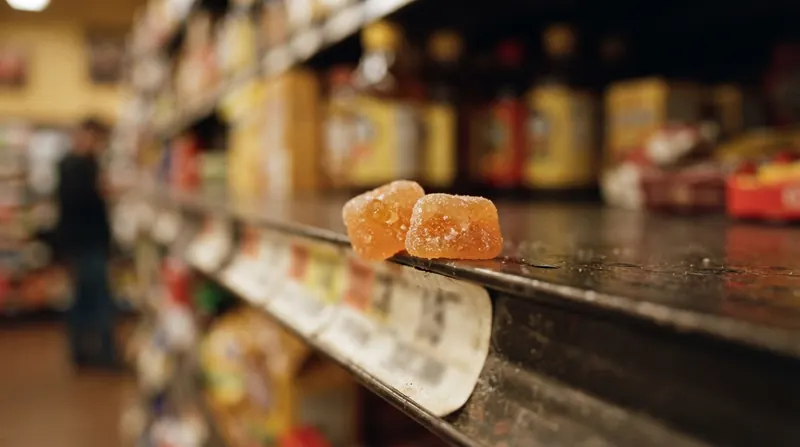
The honest comparison is against the things you already buy to fight the same fog, and those add up fast.
A calculator app and a receipt drawer would tell most households more than any label will.
That is the whole reason I keep writing these columns.
Not to talk anybody out of their afternoon ritual, but to make sure the ritual is a decision instead of a reflex.
Seventy cents a day is a decision.
Eleven dollars a week of vending machine retries is a reflex.